PRD-to-Spec Workflows Help Only When They Preserve Engineering Handoff Boundaries
A practical evaluation guide for PRD-to-spec workflows, focused on agent-assisted product planning, operating boundaries, failure behavior, and production readiness.
A practical evaluation guide for Dragonfly, focused on Redis-compatible datastore migration, operating boundaries, failure behavior, and production readiness.
A practical evaluation guide for agent data-analysis skills, focused on AI-assisted analytics, operating boundaries, failure behavior, and production readiness.
A practical evaluation guide for Holographic memory, focused on agent long-term memory systems, operating boundaries, failure behavior, and production readiness.
A practical evaluation guide for GoDoxy, focused on container discovery and reverse proxy operations, operating boundaries, failure behavior, and production readiness.
A practical evaluation guide for AI browser memberships, focused on browser-based AI subscriptions, operating boundaries, failure behavior, and production readiness.
A governance lens on Karakeep, Linkwarden, wallabag, Shiori, and memos as self-hosted knowledge capture systems.
oh-my-pi is a useful reference for evaluating coding agents as runtimes: edit reliability, context hygiene, LSP, debugger evidence, browser state, and governance.
Agent-Native is less about adding a chatbot and more about making actions the governed control plane for humans, agents, MCP, A2A, HTTP, and CLI.
tRPC-Agent-Go is valuable less as a chatbot wrapper and more as a governance surface for tools, sessions, protocols, evaluation, and telemetry.
Timefold Solver offers a more governable approach to scheduling and routing: explicit constraints, score levels, tested rules, and reproducible optimization.
CodeSeek is a local code intelligence layer for agents: call graphs, hybrid retrieval, MCP tools, and a more reviewable way to choose repository context.
peerd is best read as a browser-agent governance sample: local custody, actor isolation, egress control, scoped grants, and auditability before autonomy.
OpenViking uses viking:// namespaces, layered context, and MCP access to turn agent memory and RAG into governable infrastructure.
JetBrains Koog is best understood as a Kotlin/JVM-native boundary for production agent workflows, with graph orchestration, MCP tools, memory, and observability.

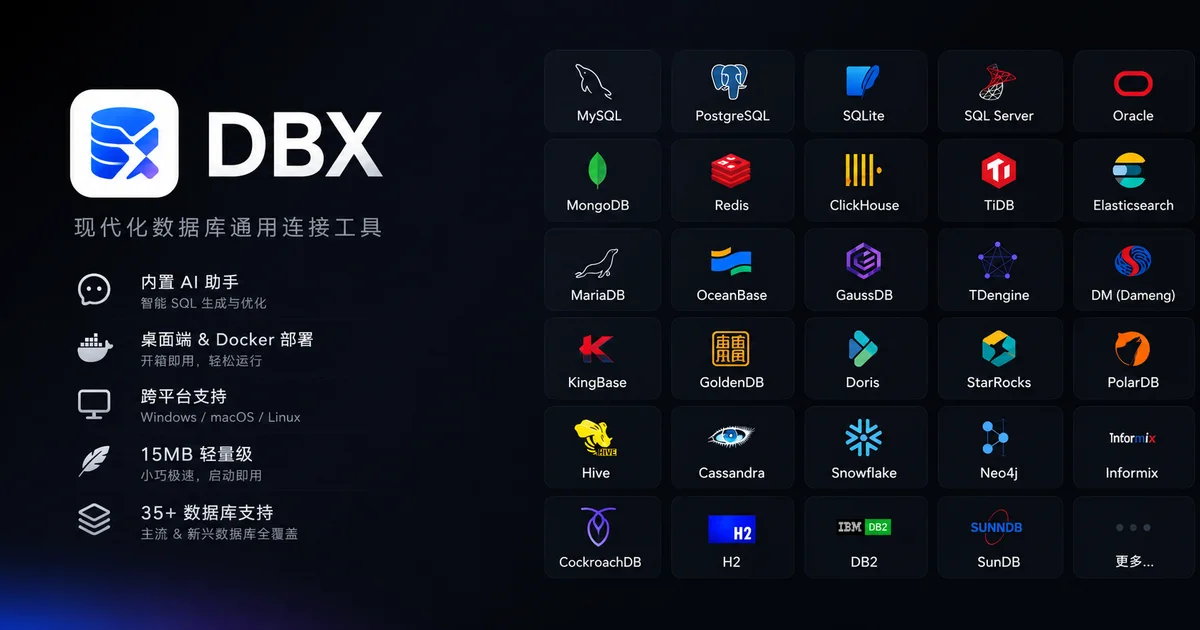
DBX combines a lightweight database client, Docker self-hosting, AI SQL, MCP, and CLI access; its real value is a governed database access layer for humans and agents.
A differentiated look at Uptime Kuma as an outside-in availability contract monitor for small teams, rather than a replacement for logs, metrics, and tracing.
ByteByteGo system-design-101 is most valuable when teams use diagrams to challenge assumptions, mark failures, and clarify ownership instead of copying architecture patterns.
The macOS/x64 JDK port leaving maintenance should be handled as a support-matrix and engineering governance issue, not as a one-day compatibility scare.
A practical review of Netcatty -assisted SSH workspace, with emphasis on workflow consolidation, SFTP ergonomics, and safety boundaries around AI execution.