Repo Prompt became free, but the strategic story is really about owning the context layer
A product and operations reading of Repo Prompt: the meaningful change is not just free access, but the recognition that context selection is a controllable layer in AI software delivery.
Repo Prompt going free is the obvious headline. The more durable product story is that a once-niche layer of AI development tooling is becoming strategically visible: the context layer. In operational terms, Repo Prompt is not just a nicer way to assemble prompts. It is a system for deciding what parts of a repository are surfaced to a model, how they are compressed into a usable package, and how that package fits inside the economics and control boundaries of an AI coding workflow. Once a team is shipping with coding agents rather than casually experimenting with them, that layer becomes part of the product delivery system.
The operational problem it actually solves
From a product-operations perspective, the failure mode is easy to recognize. A team asks an AI assistant to modify a mature codebase, but the model sees only a local file, a partial trace, or a badly chosen set of supporting files. The output may sound plausible, yet still violate architecture, naming conventions, dependencies, security assumptions, or deployment expectations. The common reaction is to blame the model. In many cases, the real problem is upstream: the system never provided a useful working representation of the codebase.
Repo Prompt matters because it treats that representation step as an explicit capability. The early product helped users select relevant files, functions, and structure from a repository, then package them for models such as Claude, ChatGPT, Gemini, or Codex. In operational terms, that means lower prompt-prep friction, better task framing, more consistent model grounding, and more predictable token usage. It also means the team can reason about context quality as something it owns and improves, rather than something it vaguely hopes the assistant gets right.
Why the product category is getting more important
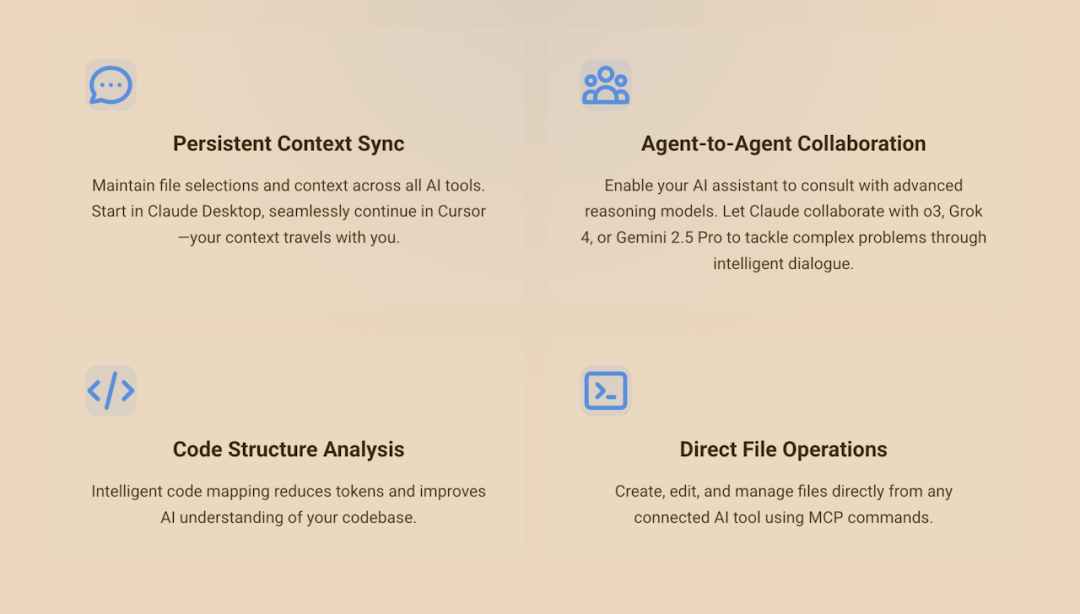
AI coding tools are moving from single-turn assistance toward governed execution. Once a workflow includes planning, tool use, code modification, review, and verification, the context layer stops being a convenience and becomes a control surface. The source material points to that evolution through Context Builder, workflows, MCP server support, and multi-agent orchestration. Those are not random features. They indicate that Repo Prompt has been moving from a user-facing prompt utility toward a programmable service inside a broader agent system.
For product and operations leaders, that distinction matters. A chat wrapper is easy to demo and hard to operationalize. A controllable context layer is harder to market in one sentence, but far more useful in production. It influences cost, latency, consistency, security review, and incident analysis. If an agent makes a bad change, one important question is whether the model reasoned badly. Another is whether the system framed the task badly. Repo Prompt lives on that second question.
What OpenAI hiring Eric Provencher suggests
OpenAI bringing Eric Provencher in should be read as a workflow signal, not just a talent headline. Large model companies have already learned that stronger models do not automatically produce stronger developer outcomes. The bottlenecks increasingly sit in repository understanding, tool integration, evaluation, and human control. A founder who spent years productizing those frictions carries a specific kind of operating knowledge that model labs need if they want to build usable coding systems rather than impressive demos.
The reported handoff details add another clue. Existing Repo Prompt users are being offered Codex credits, which creates a visible bridge between the old product experience and OpenAI’s own coding ecosystem. That does not guarantee direct feature transfer, but it strongly suggests conceptual alignment. If OpenAI wants coding agents to become more effective in real repositories, acquiring expertise in context engineering is a logical move.
What product teams should evaluate here
The key lesson is that AI coding quality is not only a model-choice decision. It is a systems-design decision. Teams that want reliable AI-assisted delivery should evaluate the context layer with the same seriousness they apply to CI, permissions, review, and observability.
- Can repository context be selected and packaged consistently across developers and tasks?
- Is token usage disciplined enough to keep automation economically viable?
- Can the context layer be integrated with agent runtimes, MCP servers, and workflow orchestration?
- Is there a way to evaluate whether a context strategy improves correctness instead of just increasing verbosity?
- Can the workflow preserve control and explainability when agents touch larger code surfaces?
These are not cosmetic questions. They determine whether AI coding remains a useful accelerator or becomes an expensive source of low-confidence output.

Why free access is only the beginning
In the short term, free access increases adoption and lowers experimentation cost. That is meaningful. But the more important business question is what happens next. If Repo Prompt becomes open source, will it attract maintainers who can keep pace with changing model interfaces, repository patterns, and agent frameworks? Will it become a common context backend that other tools depend on? Or will its ideas be absorbed more fully into vendor-controlled products such as Codex?
There is also a familiar open-source risk. Products shaped heavily by one founder do not automatically become robust community infrastructure when that founder moves on. Roadmap continuity, governance, documentation, contributor onboarding, and long-term trust all become operational concerns. The context layer may be strategically important, but strategic importance does not remove maintenance burden.
The practical takeaway
The practical product takeaway is simple: teams should stop thinking of context as leftover prompt text. Context is an operational asset. It shapes how models interpret code, how agents scope work, how much automation costs, and how safely an AI system can be embedded into engineering delivery. Repo Prompt matters because it made that layer visible, useful, and now widely accessible.
So yes, the tool became free. But the deeper development is that the market is starting to recognize a broader truth: whoever owns the context layer owns a meaningful part of AI software delivery.