The important part of OpenTag is control, not cloning Claude Tag
A product-operations view of OpenTag: the value is owning context, approvals, runtime, and model choice.
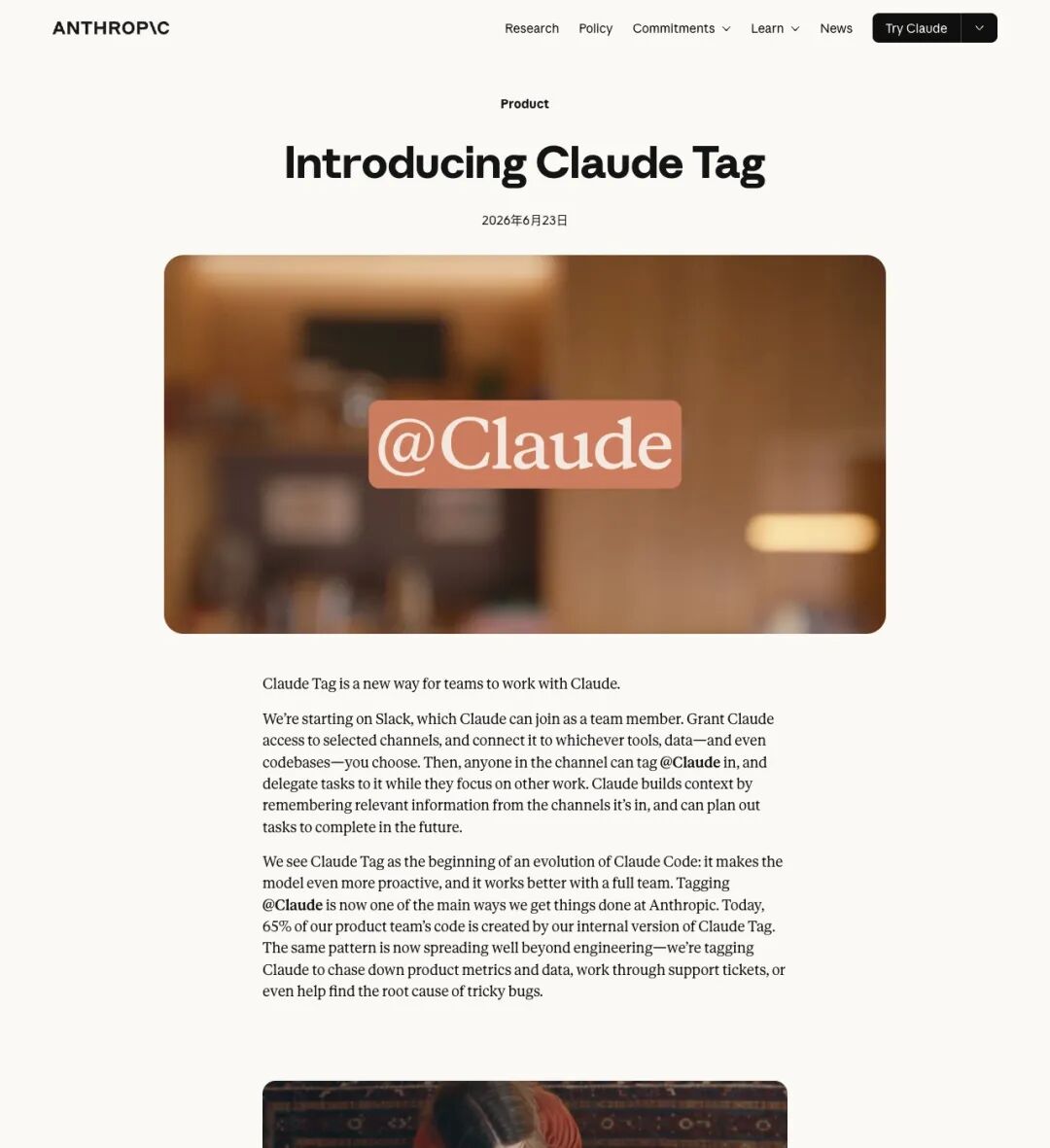
OpenTag should be read less as a “Claude Tag clone” and more as a product-operations experiment: what would it take to let an AI coworker participate in the daily operating system of a team without losing control of the operating system itself? Slack is where decisions are made, Linear is where work is tracked, Notion is where context is stored, and GitHub is where changes become real. An agent that crosses those surfaces is no longer a sidecar chatbot. It becomes part of the company’s execution layer, which means product and operations teams need very clear answers about ownership, approvals, metrics, and rollback.
The product question is not the chat interface
The Slack mention is the easiest feature to understand and the least important feature to obsess over. The durable product question is whether teams can turn messy conversation into controlled action. A useful agent should recognize the current thread, understand who is asking, retrieve the right background information, produce a concrete next step, and stop before it mutates another system. That is a product workflow, not a prompt trick.
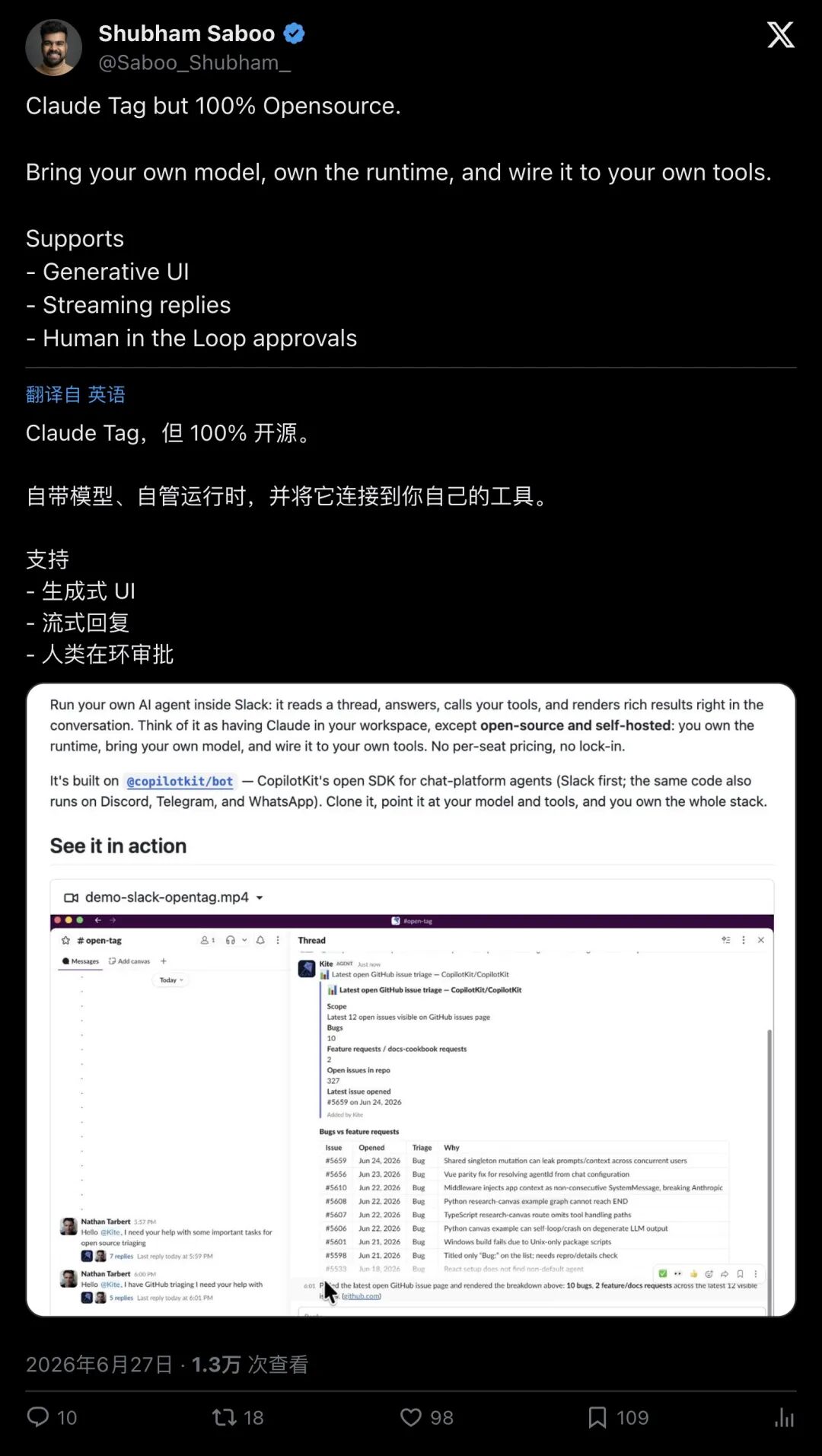
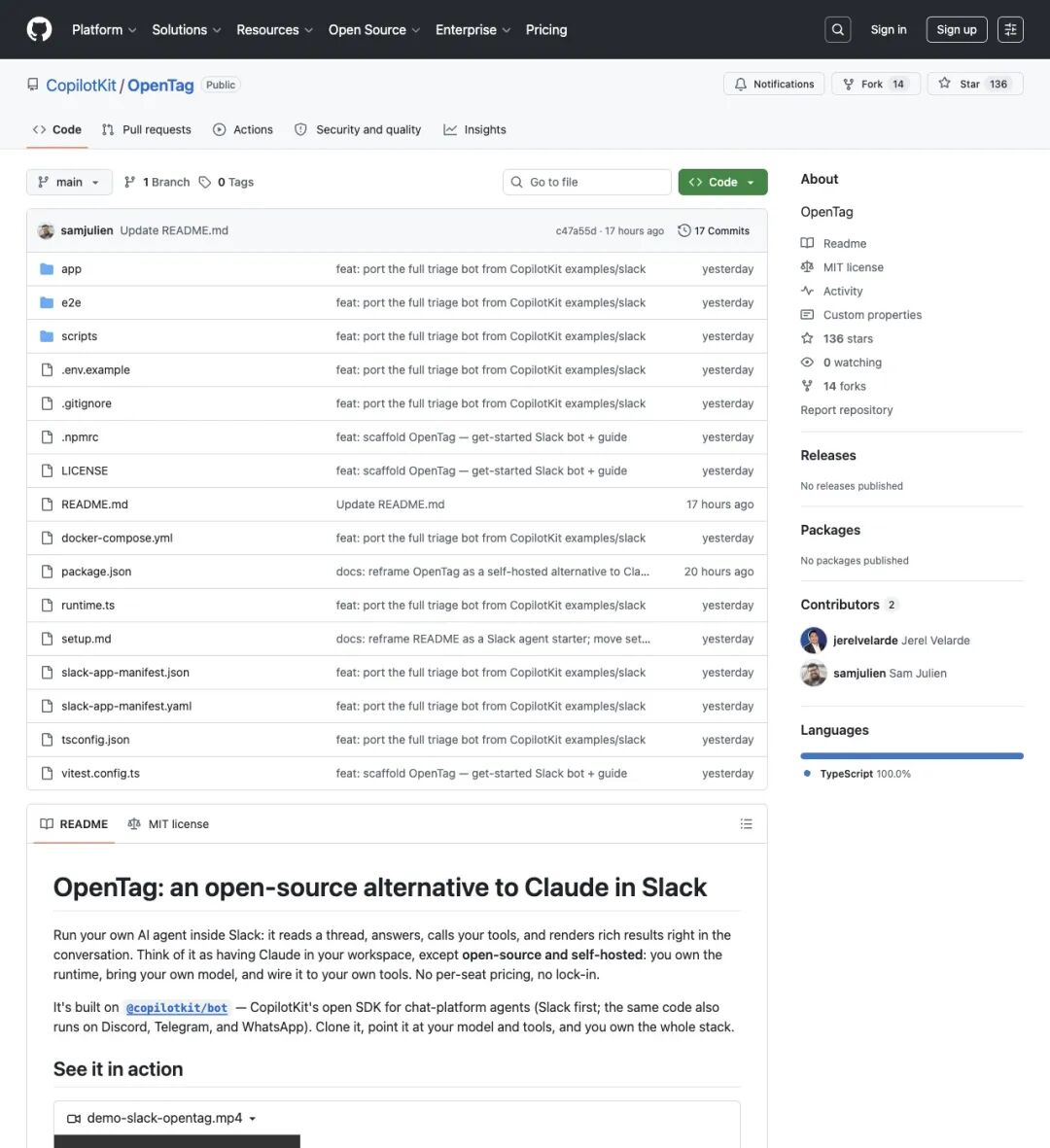
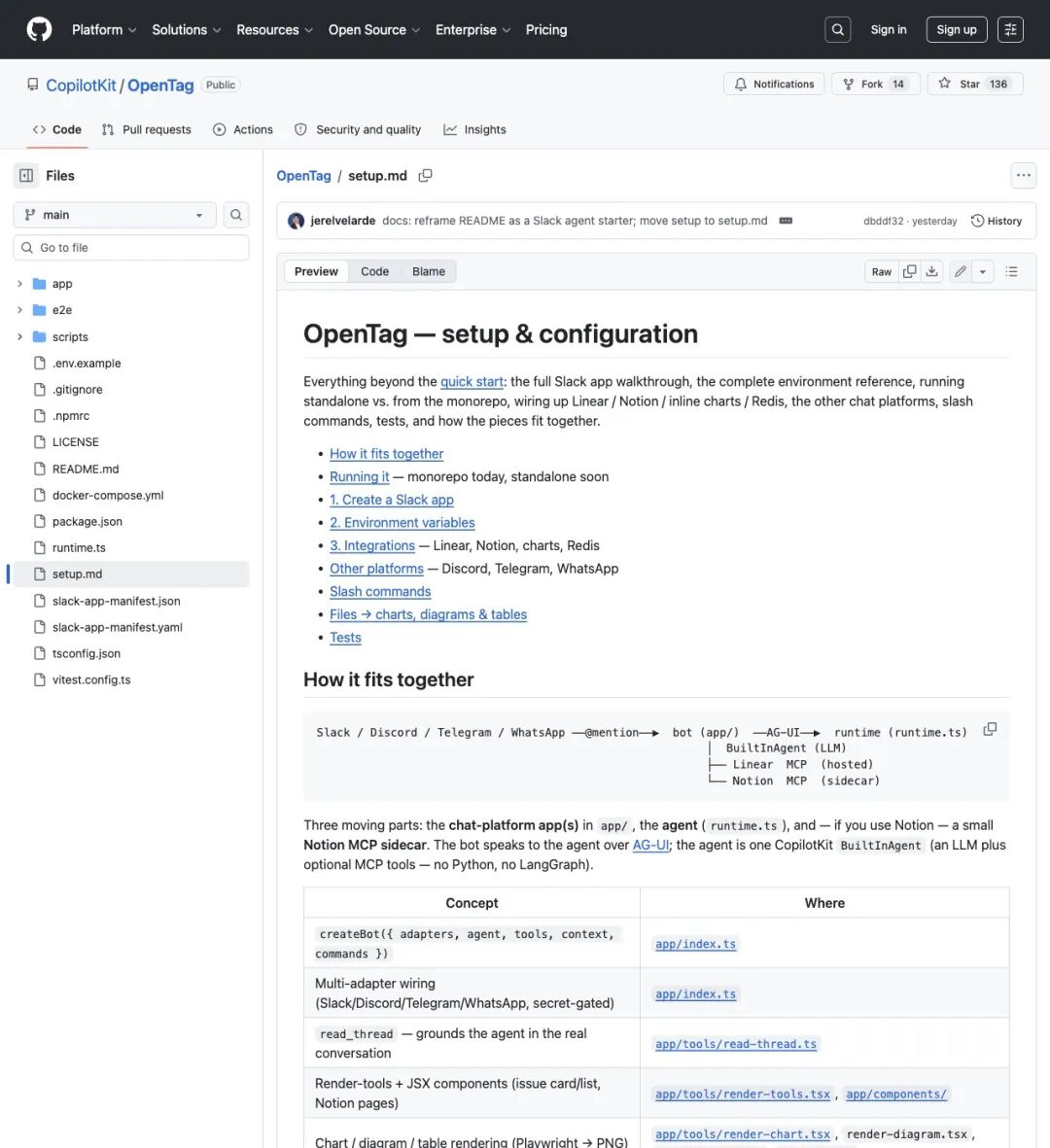
OpenTag is interesting because its architecture exposes the levers a product organization will care about. Model choice is configurable rather than fixed. The runtime can be self-managed. Tool connections can be composed. Human approval is part of the write path. Those decisions make it possible to discuss service levels, cost limits, security reviews, incident handling, and tool ownership in a way that a fully closed assistant often does not.
For product operations, the distinction is practical. If an agent summarizes a launch thread, drafts release notes, creates a follow-up ticket, and updates a project page, each step has a different risk profile. Reading and summarizing are low-risk. Drafting is medium-risk. Writing to the system of record is high-risk. OpenTag’s value is that it gives teams a place to encode those differences rather than pretending all agent actions are the same.
How operations teams should frame the rollout
The first deployment should not be a dramatic “AI employee” announcement. It should be a narrow workflow with a known owner and a measurable baseline. For example: triage inbound product feedback, prepare a weekly customer-escalation digest, or convert a resolved incident thread into a postmortem draft. These workflows are repetitive enough to benefit from automation, but important enough to reveal whether the approval and audit model is real.
The rollout owner should define the action classes before the agent is invited into the channel. Which actions are read-only? Which actions can create drafts? Which actions require approval from the requester? Which actions require approval from a channel owner or system owner? The answers should be reflected in the agent’s tool policy, not remembered as tribal knowledge.
- For customer-facing workflows, require human approval before any external message is sent or any customer record is changed.
- For product planning, allow the agent to draft summaries and candidate tickets, but require confirmation before creating or reprioritizing work.
- For engineering operations, separate diagnostic commands from commands that change infrastructure, branches, issues, or deployment state.
- For analytics, make the data source and query assumptions visible so that a polished chart does not hide a weak interpretation.
- For compliance, retain prompts, tool calls, approvals, and final outputs long enough to reconstruct a disputed action.
Metrics that matter more than demo quality
A demo rewards speed and surprise. Operations work rewards reliability. OpenTag should therefore be judged with metrics that map to the health of a real workflow. How often does the agent ask a clarifying question instead of guessing? How many proposed write actions are approved without edits? How many are rejected? Does the agent reduce cycle time, or does it merely move effort from drafting to reviewing?
- Measure time saved per workflow, not number of messages generated.
- Track approval rate, rejection rate, and edit distance between proposed and final actions.
- Monitor model spend by workflow so that cost does not disappear into a shared platform bill.
- Review permission failures and attempted out-of-scope tool use as product signals, not only as errors.
- Ask whether the workflow remains understandable when the agent is unavailable; dependency risk is part of the product design.
Why openness changes the buying decision
Closed assistants can be easier to start with, but they often make the second phase harder: custom policy, custom deployment, custom reporting, and integration with existing incident processes. OpenTag’s open approach changes the buying decision from “Do we like this vendor’s assistant?” to “Can we operate this pattern ourselves, or with a vendor, while keeping architectural leverage?” That matters when agent workflows become embedded in product rituals.
The trade-off is responsibility. A self-managed runtime means the team must think about secrets, logs, upgrades, Slack app permissions, model routing, and infrastructure reliability. That is not a drawback for every organization. For teams whose workflows are sensitive or differentiating, accepting operational responsibility may be preferable to outsourcing the control plane.
Conclusion
OpenTag’s most important contribution is not imitation. It is a concrete reminder that workspace agents need product management and operations design as much as model capability. The winning version of this category will not be the bot that sounds the smartest in a launch video. It will be the system that lets teams define safe actions, measure outcomes, change models, inspect behavior, and keep control of the work graph they depend on.