The Jalapeño announcement is a financing and supply-chain signal
A product-operations reading: OpenAI needs custom inference economics more than a headline Nvidia rivalry.
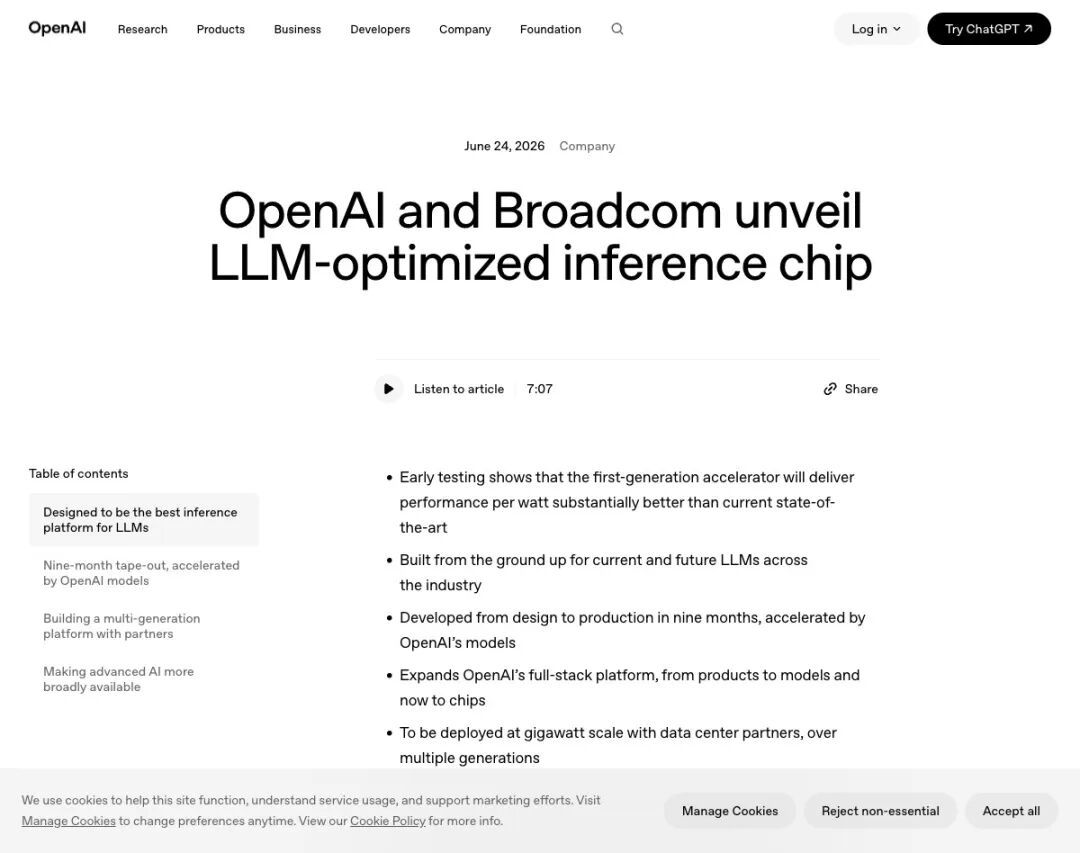
The Jalapeño story is most useful when viewed as an operations and financing signal, not as a clean product fight with Nvidia. OpenAI’s challenge is not simply to buy faster chips. It must keep model quality improving while serving massive user demand, containing inference costs, securing enough power and data-center capacity, and convincing partners that the next phase of AI infrastructure can be financed. A custom Broadcom-linked ASIC program speaks to all of those audiences at once.
Why product operations should care
For a consumer or enterprise AI product, infrastructure is not a back-office detail. It shapes pricing, rate limits, latency, feature design, model routing, and gross margin. If inference remains expensive, product teams are forced to ration usage, simplify features, or charge prices that slow adoption. If inference becomes cheaper and more predictable, the product surface can expand: more agent loops, longer context, richer multimodal output, and more background automation.
That is why Jalapeño should be read through the lens of unit economics. The relevant question is not whether OpenAI can produce a chip that beats every Nvidia accelerator on every benchmark. The question is whether OpenAI can identify enough stable internal workloads to make a specialized chip financially worthwhile. High-volume inference, especially where request patterns are predictable, is the natural place to look.
The announcement also functions as a market coordination signal. A 10GW-scale ambition tells suppliers, data-center developers, energy partners, and capital providers that OpenAI is planning for a very large infrastructure footprint. In that sense, the chip program is not only a technical project. It is a way to organize commitments across a supply chain that cannot be assembled at the last minute.
The operational trade-offs
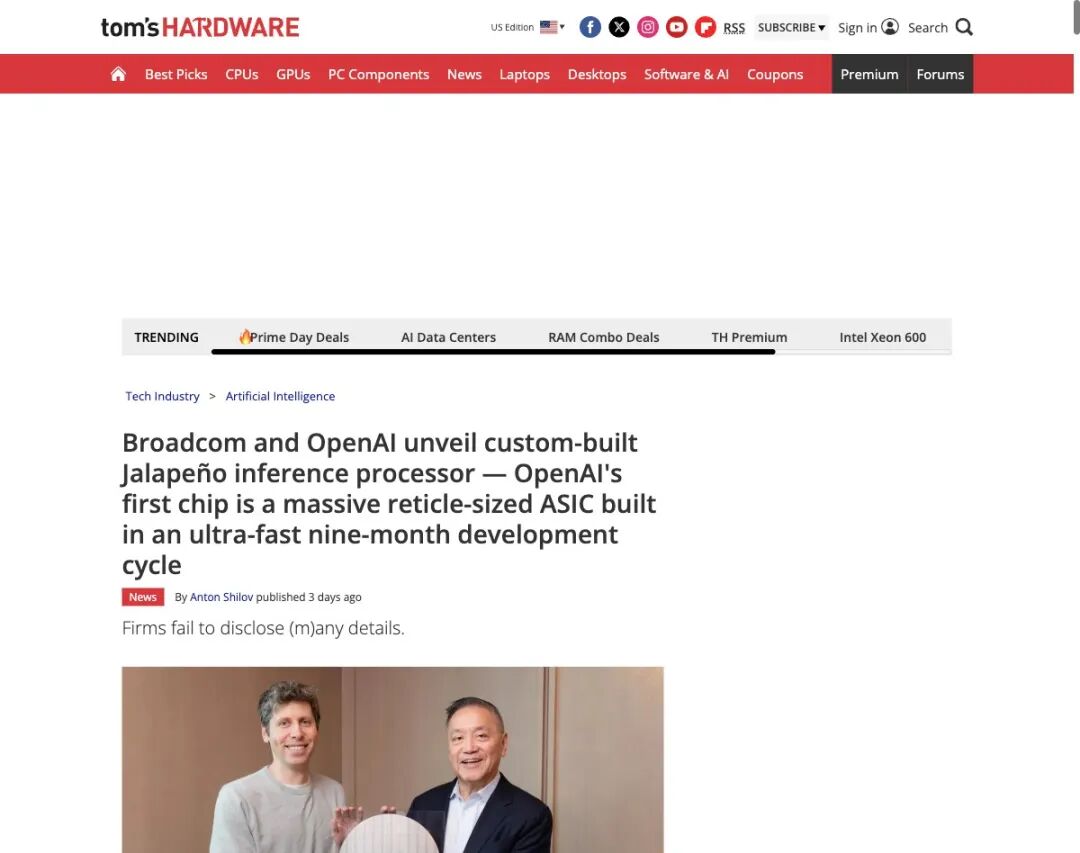
Custom silicon gives a company more control, but it also removes some flexibility. GPUs are expensive, yet they come with a rich software ecosystem, broad workload support, and a deep talent pool. ASICs can be more efficient, but only if the workload is clear, the compiler stack works, the serving system keeps utilization high, and the product roadmap does not move faster than the hardware assumptions.
For OpenAI, the operational problem is portfolio management. Research workloads, new model architectures, and experimental features still benefit from flexible GPU capacity. Mature inference paths may benefit from specialized silicon. The hard part is deciding which workloads are stable enough to commit to hardware and which should remain on more general accelerators.
- Capacity planning becomes a product decision because chip availability can determine which features receive generous limits.
- Model routing becomes a margin lever: the right request must go to the right model on the right hardware at the right time.
- Latency targets must be designed with the full serving path in mind, including networking, batching, memory, and scheduling.
- Finance teams need workload-level cost data, not just aggregate compute invoices.
- Operations teams need failure plans for a mixed fleet of GPUs, custom ASICs, and cloud or partner capacity.
What would prove the strategy is working
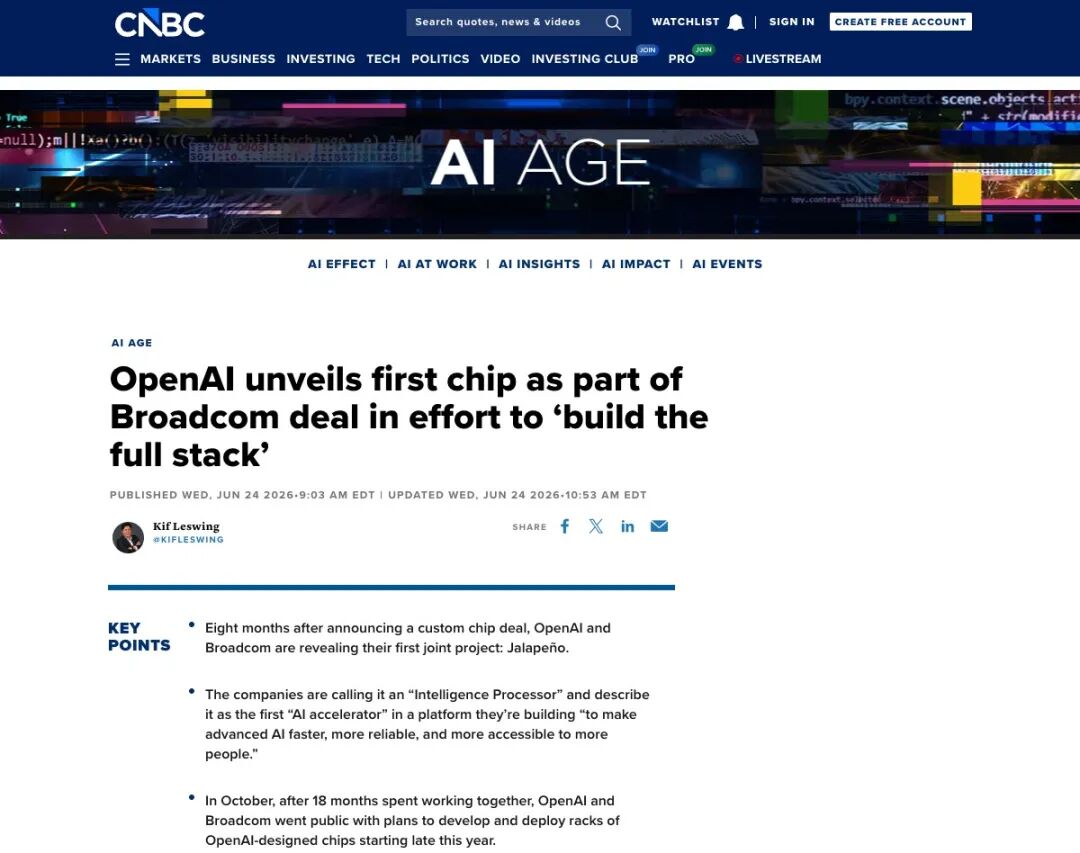
Operational proof will arrive slowly. The first proof point is not a press quote; it is a deployed system that serves real traffic at high utilization. The second proof point is software maturity: compilers, observability, scheduling, rollback, and incident response. The third proof point is economic: lower cost per token, lower cost per completed task, or more capable product behavior at the same price.
- Look for published or independently reported system-level benchmarks, not only chip-level peak numbers.
- Track whether deployment milestones are met across 2026, 2027, and 2028.
- Watch whether OpenAI changes pricing, usage limits, or feature availability in ways that imply better serving economics.
- Follow Broadcom, foundry, networking, energy, and data-center commitments as indicators of execution rather than aspiration.
- Distinguish between financial engineering, supply-chain signaling, and actual infrastructure productivity.
Risks for the product roadmap
The largest risk is mismatch. If the chip is optimized for yesterday’s serving pattern while the model architecture changes, the economic case weakens. If software arrives late, hardware can sit underused. If power and data-center capacity lag, silicon alone will not unlock growth. If the chip is efficient but difficult to operate, product teams may not feel the benefit in latency, limits, or margins.
- Do not treat “custom” as automatically cheaper; specialization pays only when utilization is high.
- Do not compare silicon price alone; include racks, networking, power, cooling, staffing, and downtime.
- Do not assume Nvidia loses immediately; mixed fleets are the likely operating reality.
- Do not ignore the financing story; infrastructure scale requires credible commitments before demand is fully proven.
Conclusion
Jalapeño is a signal that AI product strategy and infrastructure strategy are becoming inseparable. For OpenAI, custom silicon is a way to seek margin control, supply-chain leverage, and a clearer path to scaling inference-heavy products. The announcement matters even before all technical details are known because it tells the market how OpenAI wants to organize its next infrastructure cycle. The decisive evidence, however, will be operational: real deployment, real utilization, and real improvement in the economics of serving intelligence.