Haven matters because resilient networking is becoming practical again
A product-operations look at Haven: low-cost IP mesh can support disaster response, off-grid communities, and field teams.

From an operations and product viewpoint, Haven is less a hobbyist Raspberry Pi build and more a testable infrastructure pattern: use open hardware to create a resilient local IP layer when commercial networks are unavailable, overloaded, too expensive, or operationally inappropriate. The value lies in making the deployment model inspectable and repeatable.
The operational problem
Many teams do not need a perfect network; they need a network that can be assembled, repaired, and understood under stress. Emergency crews, temporary sites, outdoor events, rural operators, research teams, and community networks often face the same operational challenge: how to extend useful connectivity without depending entirely on a carrier, a cloud platform, or a single central router.
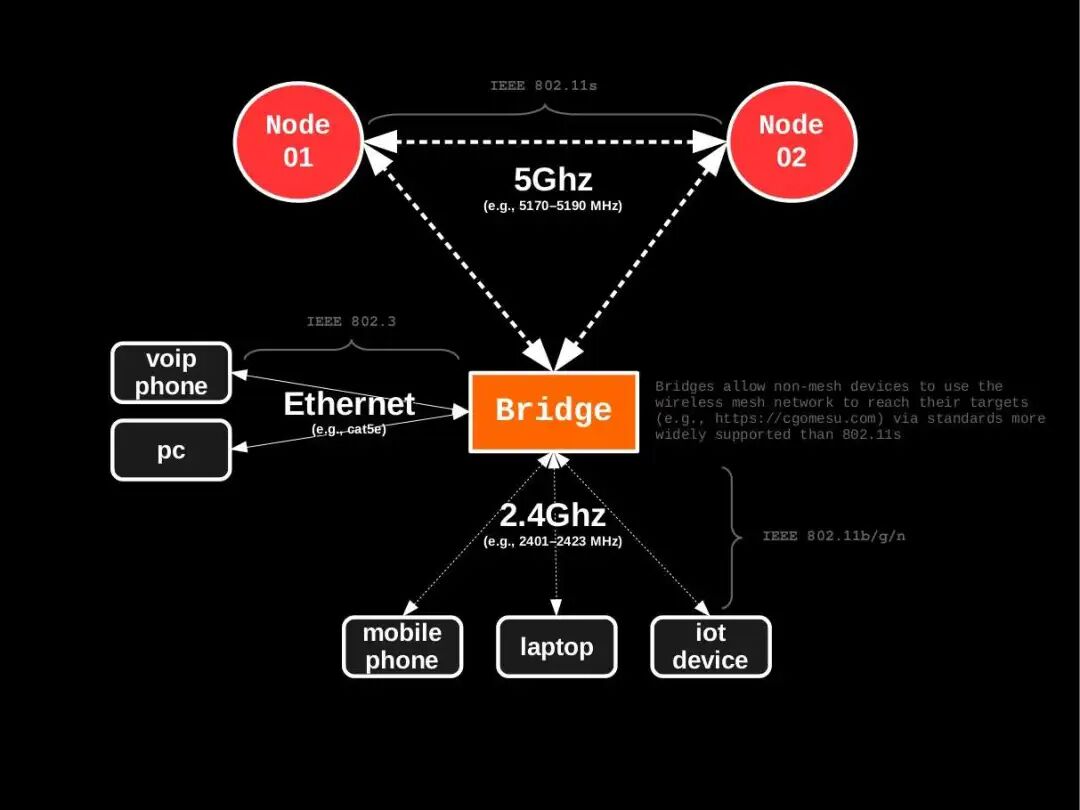
Haven’s combination of Wi‑Fi HaLow, BATMAN-adv, OpenWrt, and Raspberry Pi-class hardware turns that challenge into a productizable kit. The Gate node handles upstream connectivity, Point nodes extend the mesh, and ordinary Wi‑Fi clients can still connect in a familiar way. This matters because adoption depends not only on radio performance, but also on whether a small team can install, monitor, explain, and maintain the system.
Productizing a mesh network
The product opportunity is not simply selling nodes. It is packaging the complete operating model: site survey, node placement, power budget, firmware image, configuration templates, monitoring, documentation, training, and support. Open hardware helps because customers and operators can inspect the components, but repeatability comes from the surrounding process.
- Wi‑Fi HaLow creates a longer-range backhaul layer for locations where ordinary Wi‑Fi is too short.
- BATMAN-adv hides part of the routing complexity by allowing nodes to adapt to changing links.
- OpenWrt gives operators a known base for configuration, upgrades, logging, and troubleshooting.
- The Gate + Point model makes deployment roles understandable to non-specialist teams.
- Optional integrations such as Reticulum, ATAK, LoRa, and SDR tools can be offered as scenario-specific modules.

Evaluation checklist for teams
A mesh project should be evaluated like field infrastructure. The question is not whether the demo works, but whether the system can be deployed by the intended team, in the intended environment, with acceptable maintenance load.
- What local spectrum limits, certifications, and power rules apply to the planned use?
- What coverage model is required: campsite, campus, village, convoy, event, or disaster zone?
- Who will own installation, firmware updates, physical security, spare parts, and monitoring?
- How will users authenticate, and which traffic must be encrypted or isolated?
- What service level is realistic for throughput, latency, uptime, and recovery after node loss?
Adoption path
The safest adoption path is staged. A team should first validate two or three nodes, then document a repeatable installation playbook, then run a small live scenario before presenting the network as production-ready. Each stage should produce measurements and operational notes, not just photos.
- Run a tabletop configuration test and record every setting required to reproduce it.
- Perform a short outdoor trial with known distances and obstacles.
- Measure throughput, latency, roaming behavior, power consumption, and recovery after disconnects.
- Create a field checklist for mounting, waterproofing, labeling, and troubleshooting.
- Decide whether the offering is a community kit, a managed deployment, an education package, or a specialized field network.
Conclusion
Haven’s promise is operational: it makes resilient local networking more transparent and more affordable to test. The teams that benefit most will be the ones that treat the mesh as a maintained service, not just a pile of radios.