Performance testing should be an asset pipeline, not a one-off run
A product-operations view of AI-Locust: the framework matters because it turns benchmark execution into durable, reviewable, repeatable assets.
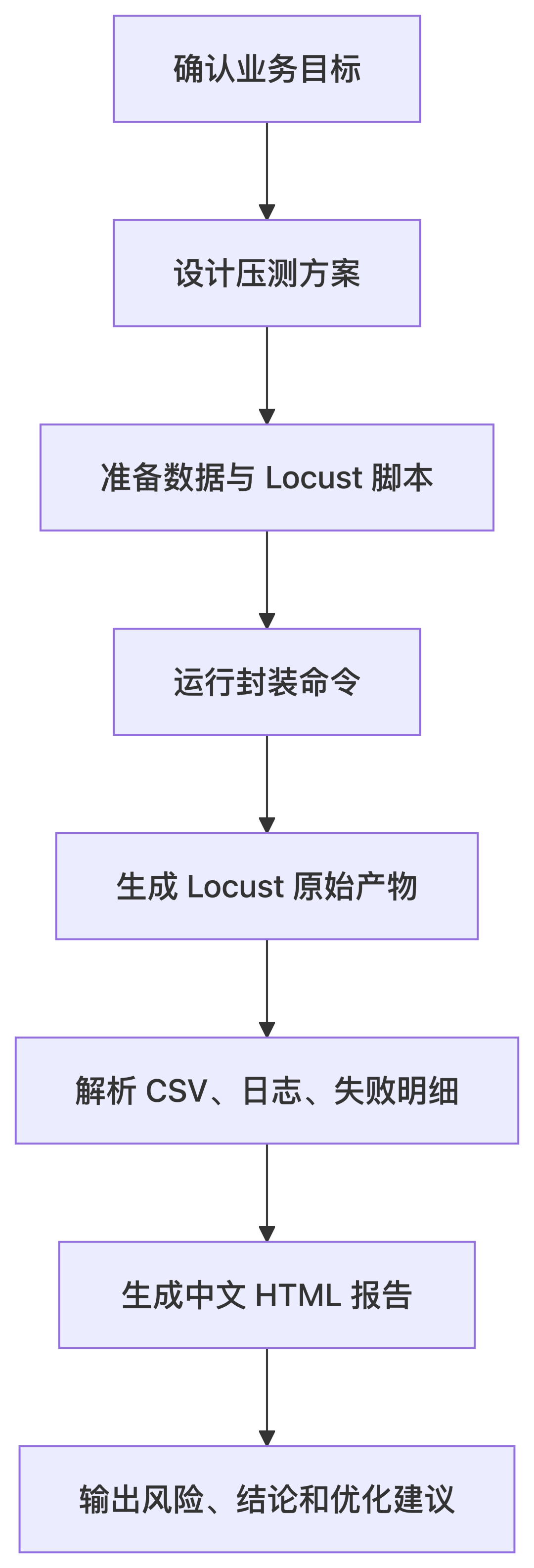
From an operations standpoint, the real value of AI-Locust is not the test run itself. It is the fact that every run leaves behind the pieces a team needs to operate performance work like a process: plan, execution, evidence, and conclusion.
Why this is an operations problem
A load test that cannot be replayed or compared is basically a throwaway. When scripts live in one place, data in another, and conclusions in chat, nobody owns the lifecycle. AI-Locust makes that lifecycle explicit.
The framework’s folder structure is the real product decision: raw results go one place, final HTML reports another, and analysis artifacts another. That means a team can track changes, review past baselines, and reuse the same process for the next release.
What teams should care about
- Can a non-author recreate the run later?
- Are thresholds defined before the test starts?
- Is failure analysis backed by raw logs and CSVs?
- Can the report stand alone for engineering review?
In practice, this is where many performance-testing efforts fail: they produce numbers, but not operating memory. AI-Locust is valuable because it forces memory into the structure of the work.
How to adopt it safely
- Start with one endpoint and one baseline test.
- Keep the raw report and the final report separate.
- Use AI for narrative, but keep the CSVs as the source of truth.
- Track repeated failures as process debt, not as one-off noise.
If a team treats performance testing like an operational capability, this kind of framework is a good fit. If the team only wants a quick number for a release meeting, it is overkill.
The useful output of a performance-testing framework is not a single impressive chart; it is a reusable test asset. For AI-assisted Locust work, that means the generated scenarios must be checked into the repository, parameterized for environments, and reviewed like any other test code. Start with a narrow user journey, define realistic arrival patterns, identify the service-level questions, and record what data may be synthetic versus production-like. The boundary is important because model-generated tests can overfit to happy paths or invent traffic that does not match real users. Verification should include a dry run, a small controlled load, and a comparison against existing logs or product analytics where available. The report should preserve assumptions, failures, and manual edits, not just final throughput. That makes the framework valuable for regression and capacity planning rather than a one-time benchmark theater.